


Also known as: RP, Rod-cone dystrophy, Inherited retinal dystrophy, Inherited retinal disease (IRD), Usher syndrome, Leber congenital amaurosis
This page has been checked by a named clinical or subject-matter reviewer (see the byline above). It remains general information, not a substitute for advice from a qualified eye care professional about your own eyes.
An RP diagnosis raises a lot of questions, often for a whole family at once. This page cannot answer everything, because RP varies so much from person to person, but it can give you an honest picture of what the condition is, what helps, and where the research is heading.
This page is for general information only and is not a substitute for advice from a qualified eye care professional. If you are worried about your eyes or your vision has changed, contact your GP, optician or hospital eye service.
Overview
The retina at the back of your eye contains two kinds of light-sensing cells. Rod cells sit mainly around the edges; they work in dim light and give you side vision. Cone cells cluster in the centre; they give you detail, reading and colour. In RP, a fault in one of many possible genes means these cells gradually stop working, rods first, cones later. That order explains the pattern people notice: trouble seeing at night comes first, then the field of vision slowly narrows from the edges, while central detail usually holds up for a long time, often into your 50s or beyond.
Despite its name, RP has nothing to do with infection or inflammation. It is genetic, and it is nothing you did. It usually shows itself in childhood or between the teens and early adulthood, and it is rare, affecting roughly 1 person in every 3,000 to 4,000.
The word that matters most with RP is variability. More than 80 genes can cause it, and speed and severity differ hugely from person to person, even within the same family. A common pattern is long stable spells punctuated by a noticeable step down, then stability again. Complete blindness, with no light perception at all, is uncommon. Most people keep some useful vision for decades, though many are eventually registered as severely sight impaired.
RP is inherited in different ways. Sometimes it runs visibly through a family; sometimes it appears out of nowhere, and in fact around half of people diagnosed know of no affected relative. Genetic testing and counselling, free on the NHS, can untangle what your particular diagnosis means for you and your family.
Types of Retinitis pigmentosa
Typical RP (rod-cone dystrophy)
About this type
The most common form. Rod cells fail first, causing night blindness and gradually narrowing side vision, with central detail usually preserved for many years. Onset is typically in childhood or early adulthood. Managed with monitoring, treatment of complications such as cataracts and macular swelling, and low vision support; gene therapy exists only for the rare RPE65 form so far.
Cone-rod dystrophy
About this type
The reverse pattern: cone cells are affected earlier and more severely, so central vision, colour vision and light sensitivity decline first, with side vision affected later. Day-to-day it behaves more like macular sight loss, so magnification and reading aids tend to help more than they do in typical RP.
Usher syndrome
About this type
RP combined with hearing loss, and the most common cause of combined sight and hearing loss in young people. In type 1, profound hearing loss and balance problems are present from birth, with RP starting in childhood. In type 2, hearing loss is present from birth but more moderate, with sight loss developing in the teens or twenties. In type 3, both hearing and sight decline progressively. Families benefit from specialist deafblind support through organisations such as Sense and Deafblind UK, and planning communication approaches early makes a big difference.
Leber congenital amaurosis (LCA)
About this type
A group of more severe related conditions causing serious sight loss from birth or very early childhood, often first noticed as wobbling eyes or a strong dislike of bright light in a baby. It is the most common cause of inherited sight loss in children. The RPE65 form of LCA is the one treatable with the Luxturna gene therapy on the NHS, so genetic testing is especially important here.
Syndromic forms
About this type
In a small number of people, RP-like sight loss is part of a wider condition. Bardet-Biedl syndrome combines it with kidney problems and other features, and Refsum disease is a rare form that can actually be managed with a specialist diet. These need joined-up care from more than one specialist team.
Signs and symptoms
- Difficulty seeing in dim light or at night, usually the first sign. Eyes that take far longer than other people's to adjust when going from a bright room to a dark one
- Tripping over or bumping into things you would once have seen, as side vision quietly narrows
- Over time, 'tunnel vision', where the clear central area gets smaller
- Glare and discomfort in bright light, and difficulty coping with changing light levels
- In later stages, difficulty with reading, detail and colour, if the central cone cells become affected
- Some people see flashes or shimmers of light in the parts of their vision that are affected
Cataracts also tend to develop earlier than usual in people with RP, sometimes from the 20s or 30s onwards. They are worth knowing about because, unlike RP itself, they are straightforward to treat, and removing one often noticeably improves the quality of your remaining vision.
Where it affects the eye
What it can look like
Causes and risk factors
- A fault in one of the many genes that keep the retina's light-sensing cells healthy. More than 80 different genes can cause RP
- Family history is the main risk factor, but around half of people diagnosed know of no one else in the family with it
- Depending on the gene, RP can be dominant (a parent with RP has a 1 in 2 chance of passing it to each child), recessive (both parents are unaffected carriers, with a 1 in 4 chance per child), or X-linked (carried by mothers and mainly affecting sons, often more severely)
- Some forms come with other health effects, such as Usher syndrome, which combines RP with hearing loss
- RP is not caused by diet, screens, eye strain or anything else you did
Diagnosis and eye examinations
RP is often first suspected at an ordinary eye test, when the optometrist spots distinctive specks of dark pigment on the retina, or when someone mentions night blindness or a family history. From there you would be referred to a hospital eye specialist, and the tests, while none of them hurt, are more involved than a normal eye test, so allow time.
Expect drops to widen your pupils, which blur your vision for around six hours, so do not drive there. The specialist will photograph and scan your retina, including an OCT scan, which images the retina's layers in fine detail without touching your eye. A visual field test maps your side vision: you sit at a machine in a darkened room and press a button each time you see a light flash, about ten minutes per eye.
The test that surprises people is the electroretinogram, or ERG, which measures the retina's electrical responses to light. You sit in darkness for around 20 to 30 minutes first, then tiny sensors are placed around the eye, sometimes a fine thread under the lower eyelid or a special contact lens on the numbed eye, while lights flash. It feels odd rather than painful, and it tells the specialist a great deal about how the rods and cones are working.
You should also be offered genetic testing, a simple blood test, free on the NHS. Results can take several months, and currently the faulty gene is found in around 6 to 7 people out of 10. It is worth asking about if it is not offered, because knowing your gene clarifies what your children might inherit, can hint at how your sight may change, and is the ticket to gene-specific treatments and clinical trials. Genetic counselling, also free, helps you make sense of the results.
Treatment and management
The honest starting point is that for most forms of RP there is no treatment yet that stops or slows it. Care focuses on regular monitoring, usually a specialist review every year or two, treating complications, and making the most of the vision you have.
There is one important exception. A gene therapy called Luxturna is available on the NHS for people whose RP is caused by faults in both copies of a gene called RPE65. It is a one-off operation on each eye and was the first treatment of its kind in the world. It only helps this one rare form, which is exactly why genetic testing matters: it is the only way to know if you, or your child, could be eligible now or for the treatments coming behind it.
Complications are worth treating properly. Cataracts, which come early in RP, can be removed with routine surgery, often with genuinely useful results. Swelling at the macula, which blurs central vision, shows up on an OCT scan and can be treated with tablets or drops your specialist can prescribe.
A word about vitamin A, because older articles still recommend it: the research has not held up, high doses carry real health risks, and for some conditions that mimic RP they may make things worse. Do not take high-dose supplements without specialist advice, and be very wary of clinics abroad selling 'cures' for RP; none are proven.
The research picture, honestly told, is genuinely hopeful but slow. Gene therapies for other RP genes are in UK trials, along with gene editing, optogenetics and stem cell approaches. None are available as treatments yet. Getting a genetic diagnosis and joining Retina UK's register is the practical way to be ready if a trial opens for your gene.
Living with the condition
RP asks you to adapt gradually, over the years, and most people find their own rhythm with it. A few things reliably help.
At home, good even lighting and strong contrast do a lot of quiet work: well-lit stairs with marked edges, contrasting crockery and worktops, clutter kept off the floor. Give your eyes time when moving between bright and dark places, and use tinted lenses and a brimmed hat for glare. One counterintuitive tip: with tunnel vision, bigger is not always better. Some people read more comfortably with smaller text that fits inside their remaining central field, so a proper low vision assessment beats guesswork.
When night-time or unfamiliar places become hard work, mobility training makes a real difference. The council's sensory impairment team can teach long cane skills, and Guide Dogs can help in more ways than the obvious one. Phones are a genuine ally too: screen readers, magnification and high contrast settings are all built in.
When your sight reaches the threshold, your specialist can issue a Certificate of Vision Impairment. Registering with the council is worth doing; it connects you to rehabilitation support and unlocks benefits, concessions and workplace help through Access to Work. On driving, the law is clear: RP must be reported to the DVLA, and although some people can keep driving in the early stages after a visual field assessment, most people with RP do have to stop at some point. Planning for that ahead of time, rather than in a rush, makes it easier.
And because RP is a family condition in every sense, give the emotional side room. Uncertainty is often the hardest part. Genetic counselling helps with family planning questions, and talking to others with RP, through Retina UK's Talk and Support service or a local group, is something people consistently say they wish they had done sooner.
Support available from WDSA
We support people at every stage of RP, from recently diagnosed young adults to people who have lived with it for decades. The majority of our services are free (some activities carry a contributory charge), confidential and open to anyone in the Wakefield district, with no professional referral needed.
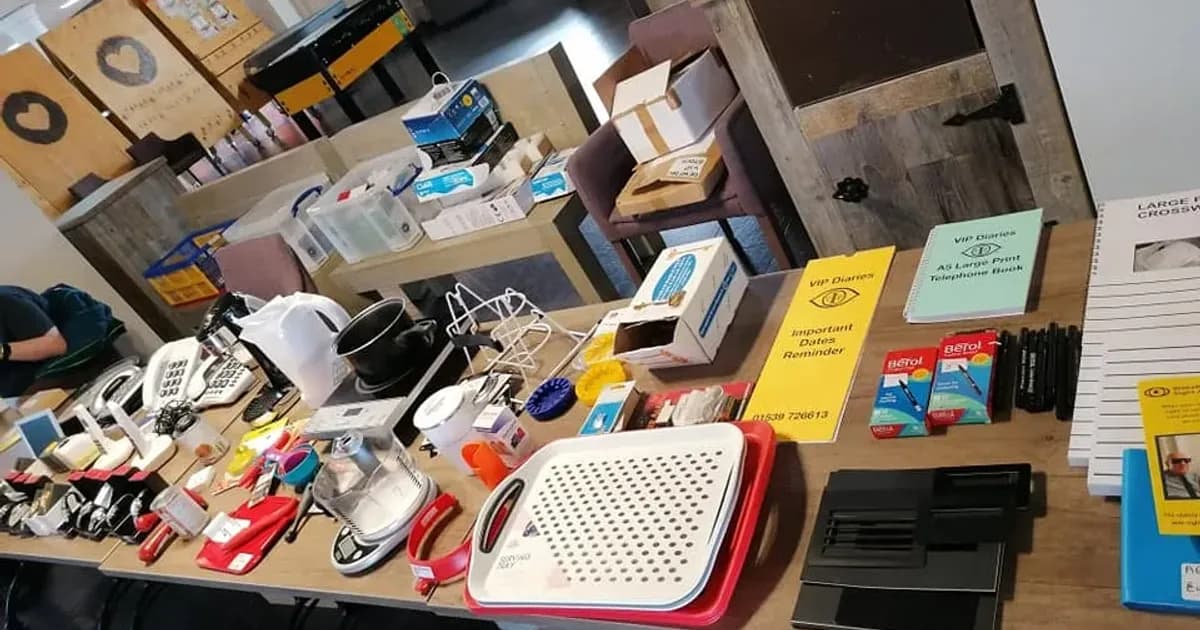
Our helpline is staffed by our friendly team and offers an unhurried conversation about your situation. Our Living Well with Sight Loss courses offers a wealth of useful information over two days about what the diagnosis means, registration, benefits and who does what locally. We also talk about getting out and about, daily living skills, and leisure activities. Our experienced Sight Loss Advisor, Nicola Ford, can visit you at home to look at lighting, contrast and trip hazards, and demonstrate equipment that helps. We regularly hold sessions where you can try magnifiers, screen readers and other assistive technology and we have specialist volunteers who can help you learn your phone's accessibility features properly.
Because RP often affects younger people balancing work and family, we can also point you to employment support such as Access to Work, and our telephone support is there when life is too full for appointments. Our social groups across the district include people living with RP, and our family and carer support recognises that an inherited condition touches the whole family.
Call us on 01924 215 555 (Monday to Thursday, 9.30am to 1.30pm), email admin@wdsa.org.uk, or visit us at St Swithun's Community Centre, Wakefield (our small team works flexibly, so please make an appointment before visiting the office).
When to seek help
RP itself changes slowly, over months and years, and gradual change is managed at your routine specialist appointments. But some symptoms are not typical of RP and need same-day attention: a sudden shower of new floaters, new flashes of light unlike anything you usually see, a curtain or shadow coming across your vision, or a sudden drop in sight. These can be signs of a retinal detachment. Contact your eye clinic, an urgent optometrist appointment or A&E the same day.
Sooner rather than later, though not urgently: worsening glare or mistiness, which may be a cataract developing and is treatable, and any new blurring or distortion in your central vision, which could be treatable swelling at the macula. Otherwise, keep your specialist reviews every year or two and an optometrist check at least every two years, and if you notice your sight has stepped down, tell your clinic rather than waiting for the next appointment.
Common questions
Will I go completely blind?
Most people with RP do not lose all their sight. Losing light perception entirely is uncommon. Most people keep useful central vision for many years, often decades, though the narrowing field usually leads to being registered sight impaired at some point. The sight you keep can be used well, with the right lighting, aids and training, and support exists at every stage.
Will my children inherit RP?
It depends entirely on which gene is involved and how it is inherited. With a dominant form, each child has a 1 in 2 chance. With a recessive form, your children will all carry the gene but would usually only develop RP if your partner happens to carry a fault in the same gene. X-linked forms pass through mothers and mainly affect sons. This is exactly what genetic testing and counselling, both free on the NHS, are for, and they will give you answers specific to your family rather than averages.
How quickly will my sight get worse?
Slowly, in almost all cases, over years and decades rather than months, but the speed varies enormously from person to person, even within one family. Many people notice long stable spells with occasional steps down, rather than steady decline. Knowing which gene is responsible can sometimes help your specialist give you a more personal picture.
Is a cure coming?
There is real momentum, and real reasons for patience. The first gene therapy, Luxturna, is already on the NHS for one rare form of the condition, and UK trials are under way for other genes, along with gene editing and stem cell research. But each gene therapy helps one gene, timescales are uncertain, and nothing yet stops most forms of RP. The practical steps today: get your genetic diagnosis, and register with Retina UK so you can be found if a trial opens for your gene. And treat any 'cure' offered for payment abroad with deep suspicion.
Should I take vitamin A?
No, not without specialist advice. Vitamin A was recommended for RP years ago, but the research has not stood up, and large doses can harm your health. For Stargardt disease, a condition sometimes mistaken for RP before genetic testing, high-dose vitamin A may actively do damage. A normal balanced diet is all your eyes need; talk to your GP and specialist before taking any supplement.
Can I still drive?
You must tell the DVLA about an RP diagnosis by law; not doing so risks a £1,000 fine. Some people can keep driving in the early stages after the DVLA assesses their visual field, which needs to span at least 120 degrees. Because RP narrows the field and affects night vision, most people do have to stop driving at some point. It is one of the hardest practical moments with RP, and planning alternatives early, from travel concessions to Access to Work support for commuting, softens it considerably.
Useful contacts
- Wakefield District Sight Aid
Local support for anyone in the Wakefield district: helpline, home visits from our Sight Loss Advisor, equipment demonstrations, Living Well with Sight Loss courses, social groups and telephone support
- Retina UK
National charity for inherited sight loss: helpline, Talk and Support telephone befriending, local groups and research news
- RNIB Helpline
National sight loss charity: advice, information and emotional support (weekdays 8am to 8pm, Saturdays 9am to 1pm)
- Guide Dogs
Mobility support and guide dog services (Monday to Friday, 9am to 5pm, free call)
- Sense
Support for people with combined sight and hearing loss, including Usher syndrome
Where this information comes from
This page was written by WDSA in plain English, using publicly available guidance from the following sources — not copied from them:
- RNIB and Royal College of Ophthalmologists — Understanding Inherited Retinal Dystrophies booklet
- RNIB — Retinitis pigmentosa
- Retina UK — Retinitis pigmentosa
- Retina UK — Genetic testing
- Moorfields Eye Hospital — Retinitis pigmentosa
- NICE — Voretigene neparvovec (Luxturna) for RPE65-related inherited retinal dystrophies
- GOV.UK — Eye conditions and driving
This page is for general information only and is not a substitute for advice from a qualified eye care professional. If you are worried about your eyes or your vision has changed, contact your GP, optician or hospital eye service.